Spotting RV Roof Damage Before It Leaks
By the time water shows up inside, the damage is already done. Here is how to catch a failing RV roof early, while it is still a cheap fix.
The short version: An RV roof fails slowly and quietly. The cheapest time to fix it is long before you ever see a stain on the ceiling. Check it on a schedule, watch the seams, and act the moment something looks off.
The Roof Is The Most Expensive Thing To Ignore
Of every system on an RV, the roof is the one that punishes neglect the hardest. When it lets water in, the damage does not stay on the roof. It travels into the ceiling, down the walls and into the floor, rotting framing and subfloor along the way. A roof reseal is a modest job. A water damage rebuild is one of the most expensive repairs an RV can need. The whole game is catching the problem on the roof before it becomes a problem inside.
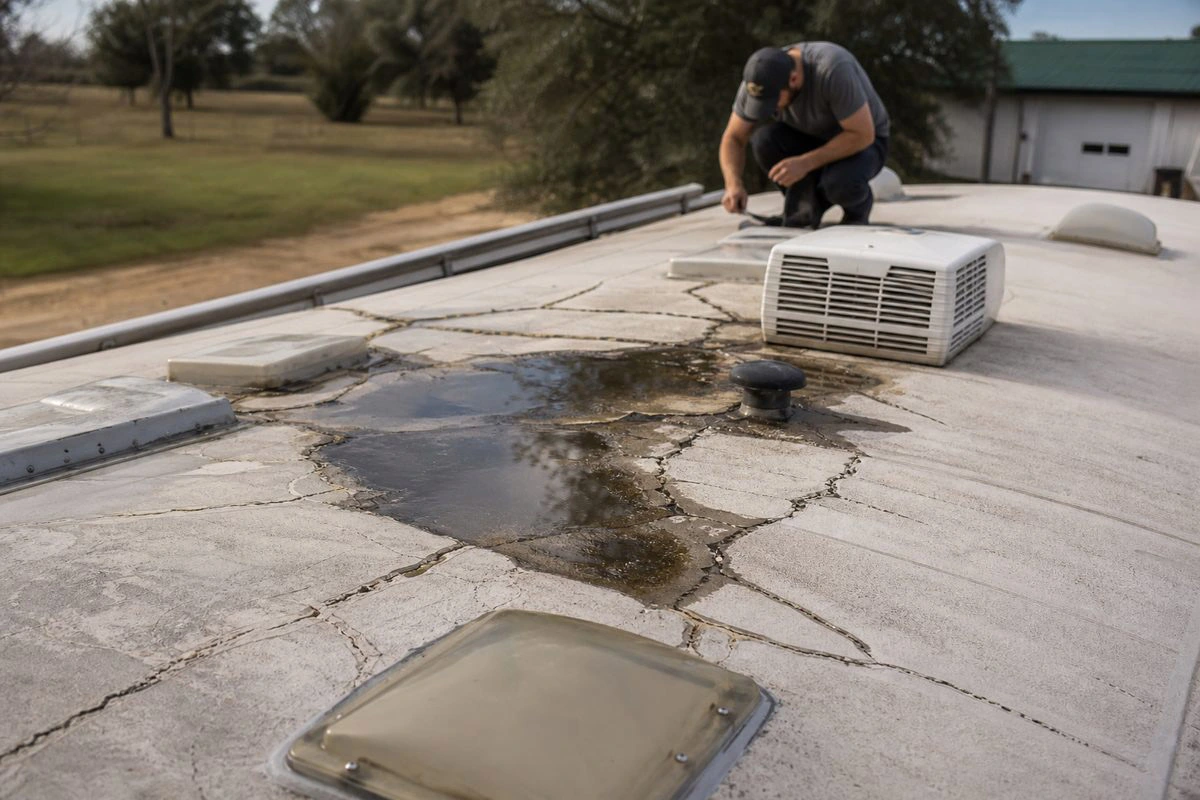
The trouble is that roofs fail quietly. The original sealant dries out and cracks over a few short years, especially under the Texas sun. Seams loosen, fixtures work free and tiny gaps open up. None of it is dramatic, and none of it shows inside until water has already been working its way in for months.
The Warning Signs Of A Failing Roof
- Cracked, peeling or missing sealant along seams and around fixtures
- Soft or spongy spots when you walk the roof carefully
- Pooling water or low spots that do not drain after rain
- Stains, bubbling or a musty smell on the ceiling inside
- Lifting or separating edges, especially at the front and rear caps
- Chalky, brittle roof material that has dried out from UV exposure
How To Inspect Your Roof
- 01
Check it twice a year
At minimum, inspect the roof in spring and fall, plus after any major storm. Put it on the calendar so it does not slip.
- 02
Walk the seams and fixtures
Most leaks start at seams, vents, the AC and the front and rear caps. Look closely at every place the roof is penetrated or joined.
- 03
Feel for soft spots
Carefully feel for any area that flexes or feels spongy. That can mean water has already gotten under the surface.
- 04
Act on anything you find
Cracked sealant or a soft spot is not a wait and see item. Address it before the next rain finds the gap.
When A Reseal Is Not Enough
Touching up a seam buys time, but once the original roof material is dried out and cracking across the board, spot fixes turn into a losing game of chasing the next leak. That is the point where a full roof solution makes more sense than another patch.
Our Forever Roof Coating System is built for exactly this. It coats the entire roof in one seamless, flexible membrane that seals existing leaks, moves with the roof instead of cracking, and reflects the Texas sun to lower interior heat. We also correct insulation and duct issues and cap the high-wear edges where leaks start. It turns the roof from your biggest worry into the part you stop thinking about.
Not Sure Where Your Roof Stands?
Ask for a free roof assessment and find out before the next storm does.